
Deployment is not installation.
Humanoid installation is fundamentally more complex than traditional industrial automation. The environment is unstructured, the human contact is direct, and the failure modes are unfamiliar to most facilities teams. These are the four service areas where Robina Robotics adds the most leverage.
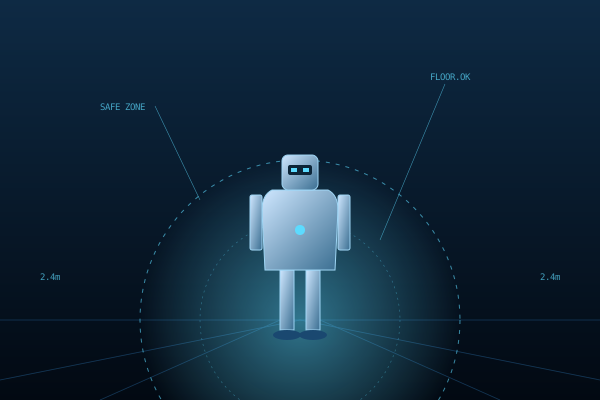
Site Assessment & Feasibility
Before a robot ships, we visit the site — kitchen, warehouse, lab, factory floor — and answer the questions a manufacturer’s spec sheet cannot. Will a legged platform handle the floor transitions? Are doorways and stair clearances workable? Is the wireless infrastructure good enough for fleet telemetry?
- Physical fit. Floor surface, stairs, doorways, ceiling clearances, lighting.
- Network audit. Wi-Fi coverage, latency, bandwidth, segmentation for robot traffic.
- Environmental factors. Temperature, humidity, dust, EMI, ambient noise.
- Stakeholder mapping. Who works near the robot, what their tasks look like, and how to keep them safe.
Safety Compliance & Risk Assessment
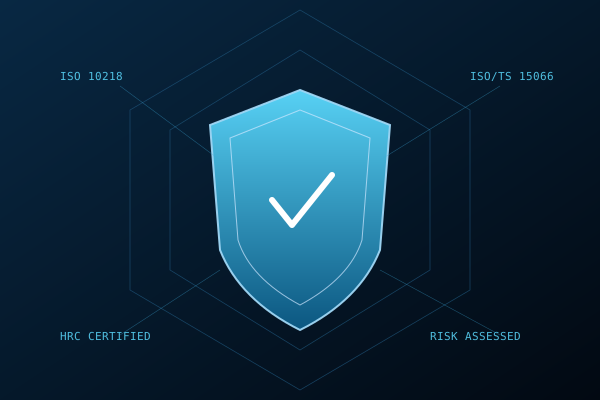
Dynamic, collaborative robots create a risk profile that did not exist a decade ago. Our safety practice is built around the standards that actually govern these machines — not generic OSHA boilerplate, but the technical specifications written specifically for human-robot collaboration.
- ISO 10218 — industrial robot safety, parts 1 & 2.
- ISO/TS 15066 — collaborative operation, including biomechanical force and pressure thresholds.
- HAZOP & risk dossiers — formal hazard analysis, signed and archived.
- Acceptance testing — measured, witnessed, and certified before sign-off.
System Integration & Networking
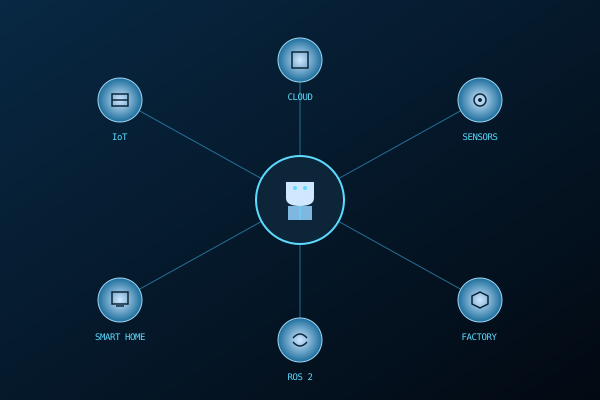
A humanoid that cannot talk to the lights, the door locks, the inventory system, or the existing fleet of cobots is a very expensive paperweight. We design the integration layer that turns a robot into a participant in the broader system.
- Smart home — Matter, Zigbee, Z-Wave, HomeKit, Google Home, and Alexa.
- IoT & sensor mesh — door sensors, presence detectors, environmental telemetry.
- Industrial IT — MES, SCADA, OPC UA, and PLC integration with the existing robot fleet.
- Identity & security — network segmentation, certificate management, audit logging.
Teleoperation & Remote Setup
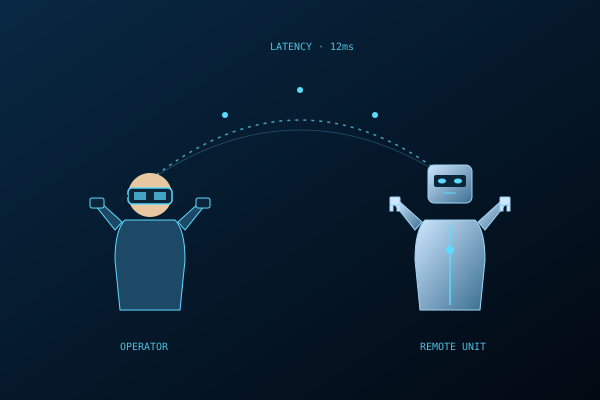
Most humanoid platforms today benefit from a human in the loop — for novel tasks, for edge cases, and for the demonstrations that train future autonomy. We set up secure, low-latency teleoperation pipelines so a remote operator can intervene smoothly and safely whenever the robot needs it.
- Operator stations — VR headsets, haptic gloves, motion-capture suits.
- Network engineering — sub-50ms paths over public internet, with graceful failover.
- Demonstration capture — recorded teleop sessions feed manufacturer training pipelines.
- Escalation policy — defined handoff rules between autonomy and the human operator.
Every site is different. Every robot is different. Every customer’s tolerance for risk is different. The work is to make the deployment fit all three.